
Ironically for a print journalist, I had always been more of a radio junkie than a reader of print or online. Once I’d settled into the US, I started checking out the local radio stations and soon found what struck me as eye-wateringly radical current affairs coverage on community radio and legendary Bay Area station KPFA 94.1FM. Back in the UK, it had been the music-oriented pirate radio stations, hugely influential in their own right, that were cutting edge culturally and in some ways technology-wise too.
KPFA is part of the Pacifica Network of radio stations founded by pacifist Lewis Hill in 1949. The station is committed to social justice and environmental sustainability, giving voice to many marginalised communities around the Bay. It’s a listener-sponsored station, guaranteeing it a degree of press freedom other stations didn’t have.
One day I heard the station announce a US$30 news reporting course it was running, promising to train up volunteer radio reporters.
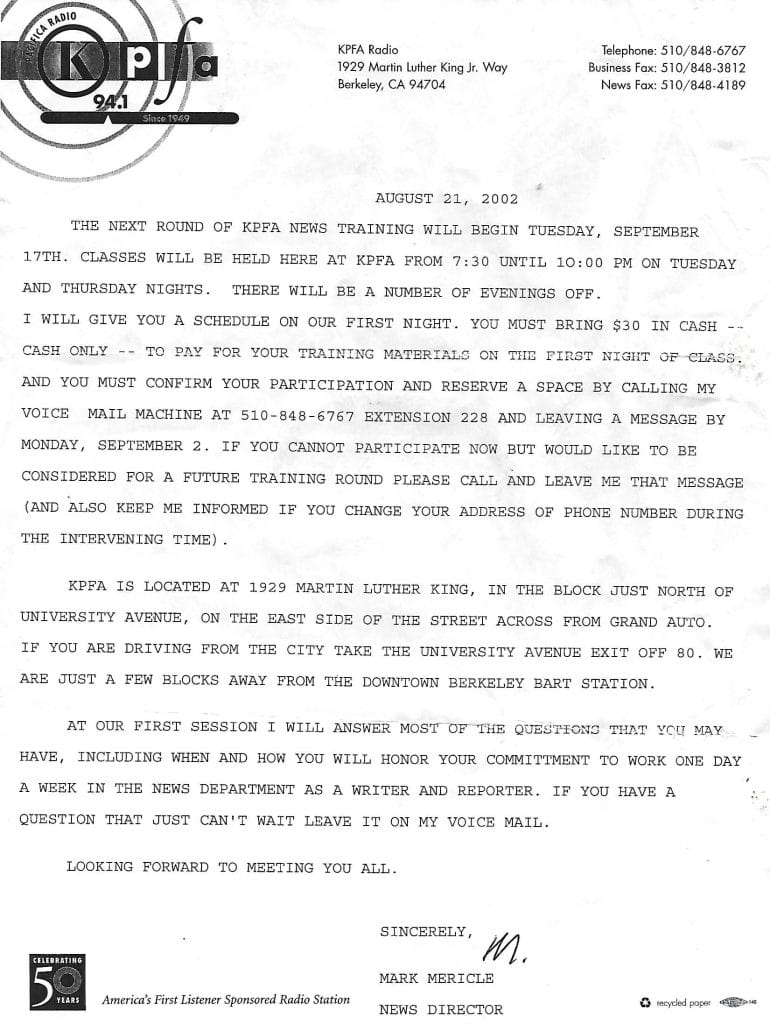
Anxious to spread my wings, I applied and was accepted. I went to the station building in Berkeley and started learning how to structure a radio story from faxed news wire leads and how to cut reel-to-reel tape with a razor. Digital editing was just coming in so I rapidly went on to use minidiscs and edit sound on the computer, though at that stage you had to play the audio into your audio software in real time. A few years later, consumer electronics would be more portable and more affordable so that media making would be more accessible to all with software such as Garageband, which democratised this process too, coming on-stream.
After finishing the course, I was let loose with my rudimentary audio skills, covering news stories on Saturday mornings between 2002-2007.
This experience was life-changing. Every week, I was sent to a corner of Oakland, Berkeley and San Francisco to cover the efforts of communities pushing for change.
Topics I covered included, but were not limited to, a rally for non-binary genders, reparations for slavery, and resistance to the military-industrial complex. Each week would be a completely different story: food parity, arts as protest, citizen police monitoring schemes, civil disobedience for fair pay, and more.
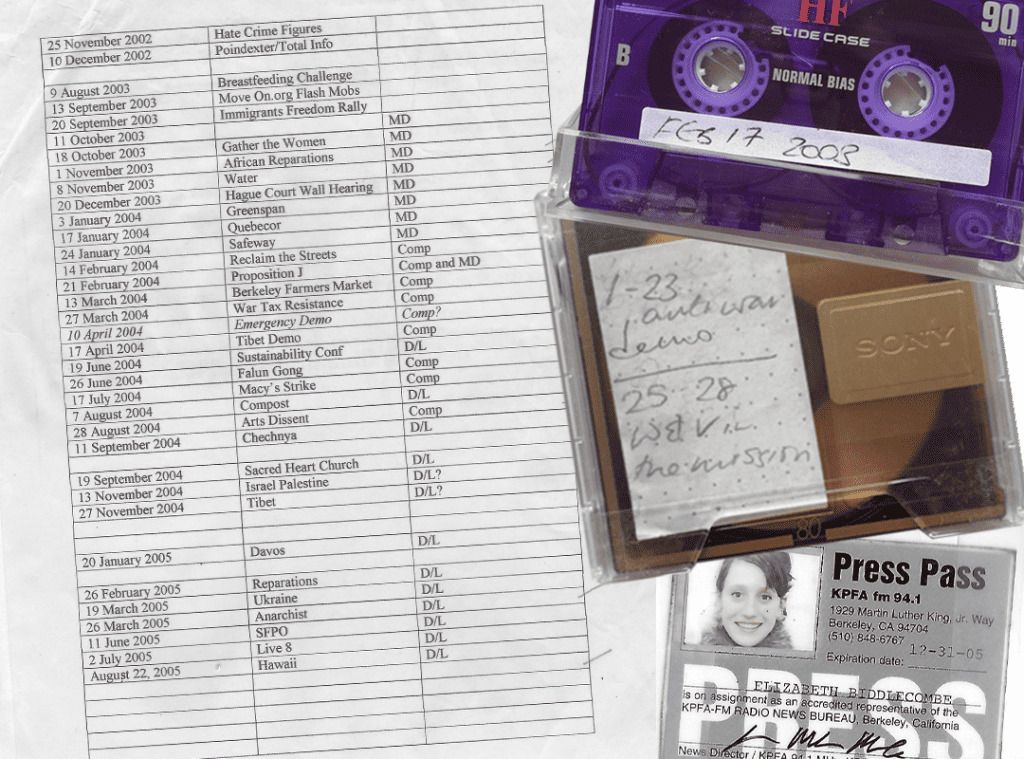
In 2003, I found myself covering huge protests against the Iraq war that seized San Francisco and many cities over the USA.
I encountered the transformative energy that pulses through the San Francisco Bay Area: people didn’t just talk about how things needed to change, but took action to bring it about, bringing about many innovations that had worldwide impact.
Outside of work, I was taking advantage of the wellness providers in every neighbourhood more and more frequently, something I needed quite often not least because of some random car accidents and a misguided addiction to doing cartwheels in nightclubs.