
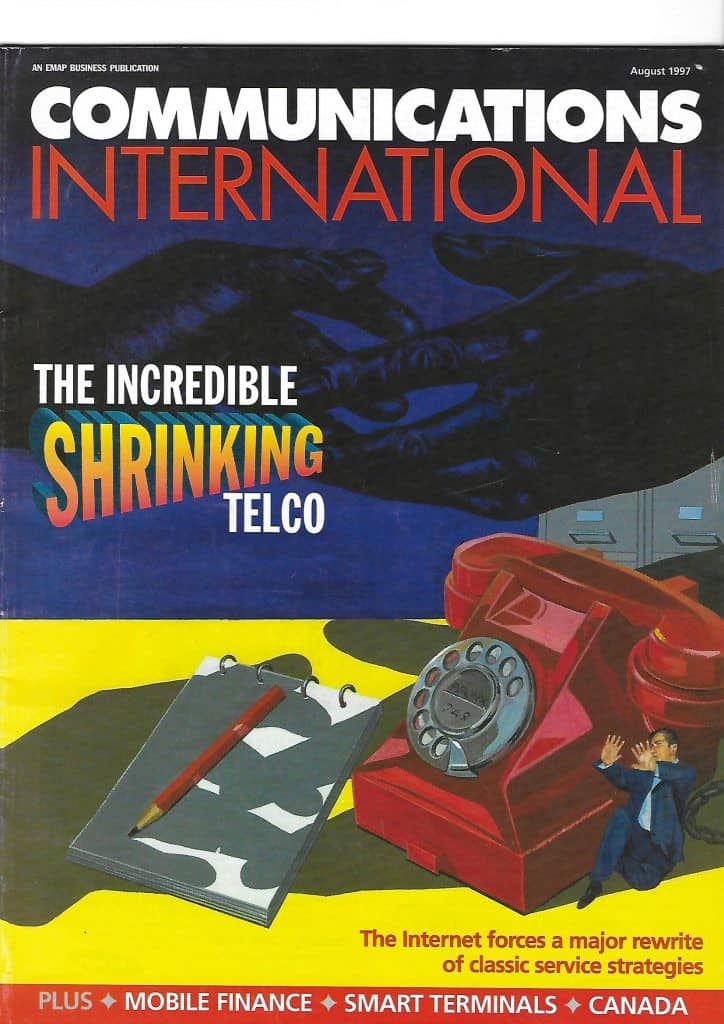
The collision of the old-school circuit-switched telephone networks run by the big national telecoms providers (the ‘telcos’) and the upstart packet-data networks run by the new ISPs (Internet Service Providers) meant that the industry was breaking new ground daily with so many ‘disruptive technologies’. It was the era of the Browser Wars between Microsoft the giant and Netscape the upstart. Talk centred around how to make websites display uniformly, how to make money online, and whether this ‘e-commerce’ thing should be taxed. PayPal had only just been formed and cash, cheques and carbon copy credit card machines was the state of play when it came to banking and payments.
Dotcom business models and networks where voice traffic could ride for free over the network threatened the old-school telecoms monopolies. PC-to-PC phone calls were being made over the Internet (using VoIP or Voice over Internet Protocol) but the quality of the audio was choppy even if the experience felt frontier. Yet the writing was on the wall for the traditional telcos who had grown fat on revenues from voice telephony over their 100-year history. If the technical challenge of ensuring the quality of service for voice calls over an Internet Protocol network could be met, then the game would change forever.
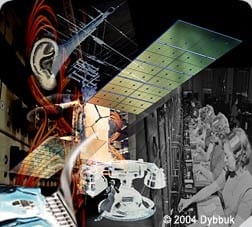
And it has. House phones are a thing of the past, as are all the traditions that went with them like answering the phone by saying the phone number, arguing over who gets to make a call, people not getting through because the line is engaged, being able to listen in on other people’s calls, and remembering all those phone numbers by heart.
Not only did the mobile supersede that, but VoIP has superseded cellular calling with people making voice calls over Whatsapp (or video conferencing via Zoom) rather than on the mobile network. And synchronous communication has been surpassed by asynchronous messaging now that the mobile is with us all the time and we are more easily disturbed by a real-time call.
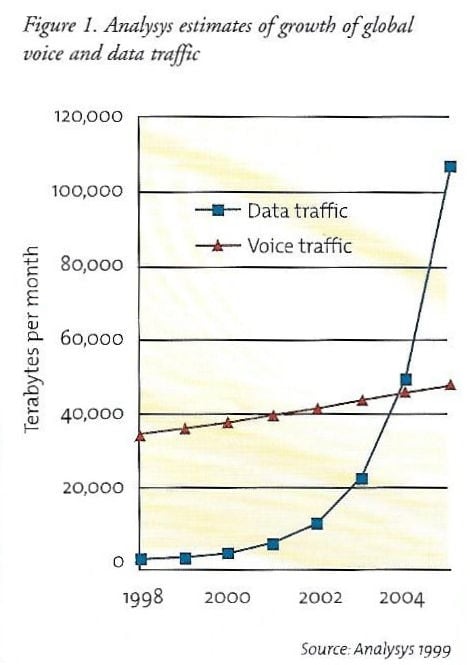
With reports of internet penetration, i.e. the percentage of the population that had access, forming exponential growth on the graphs, another key question was how to get internet access (at that time wired and via dial-up) to everyone. How could the telcos be persuaded to give competitors, especially these new upstart ISPs, access to their expensive, far-reaching networks of copper that ran to the house (called ‘unbundling the local loop’)? Further upstream, the engineers were figuring out how to run IP over legacy telecommunications networks. The new ability to send data via thin shards of optical fibre opened up the possibility of leasing a single wavelength for more helpings of bandwidth per second that people knew what to do with.
None of us had a clue what living with broadband would be like. ‘Always On’ was the buzzword and we talked about ‘pervasive computing’: being continuously connected to the network by big broadband pipes was the goal. At this stage, we were only thinking of computing devices, albeit multimedia and communication-enabled, and probably wired.
It wasn’t until the early noughties that I realised there would be a future Internet of Things, where our white goods, light bulbs, heart monitors, as well as productivity, communication, and entertainment devices would be networked, monitored and controllable from mobile always-on mobile devices.
Computer telephony integration and interactive voice response had been around for years before the IP revolution, but a networked (and voice-enabled) computer promised an integrated experience, particularly where customer services and call centres were concerned. Much of what we have come to take for granted now was being hatched at this time, such as the ability to do online chat or use a security pin that was sent to our mobile phones to access information on a website.