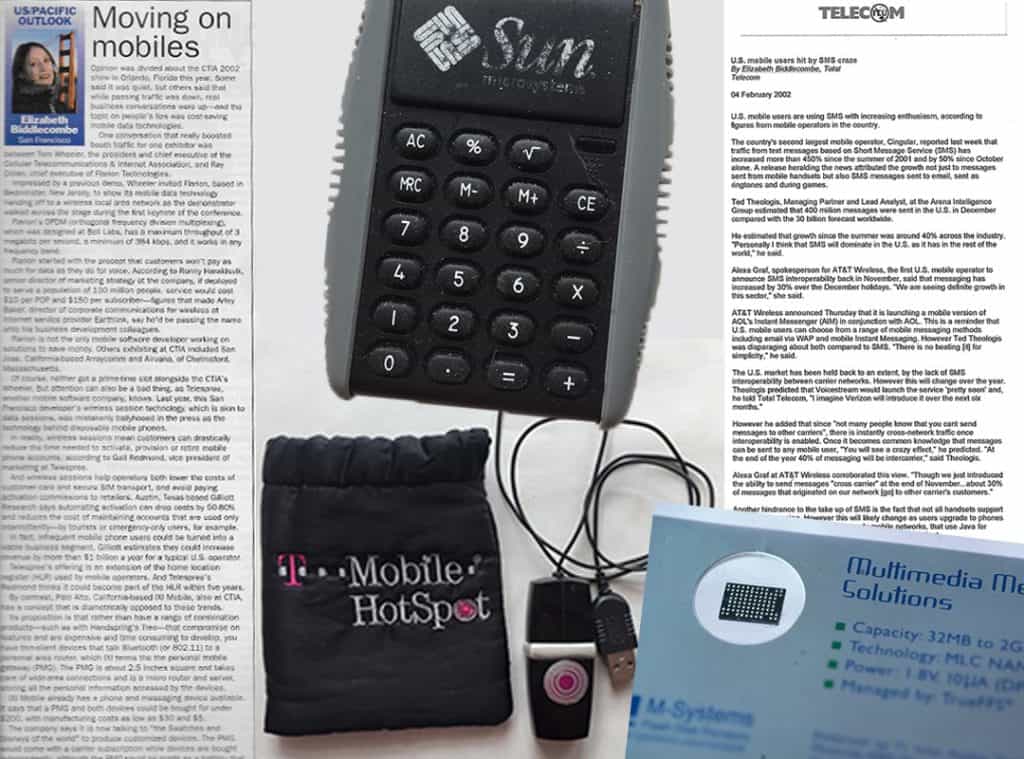
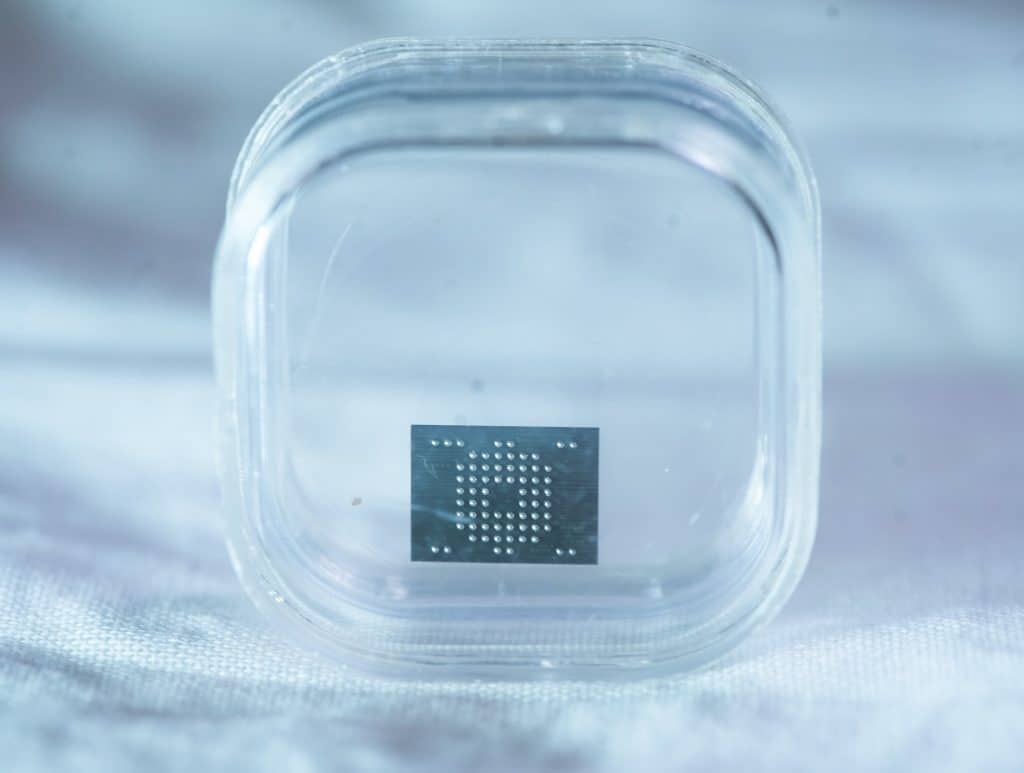
Before long, companies were coming to see me to pitch their stake in the burgeoning mobile and wireless markets as well as other sectors, bringing me gifts like the flash phone memory pictured below (whose size belies how pivotal a technology it was to the smartphones we are so glued to today). They talked about the wealth of possibilities created by handsets that could play music and videos as well as take pictures and videos: enabling things like mobile gaming and reading bar codes. Again, it was hard to really know what was meant because it had never been experienced before.
I was still buying CDs but had discovered online radio. MP3 players were all the rage in San Francisco. Apple’s iPod was launched a few months after I got there, though iTunes had not yet launched.
Personalised ringtones were about as high-tech as it got, texting into a TV show was cutting edge, we mused about dating and flirting via text message, and the horror that is sending an SMS to the wrong person was only just settling into people’s lives. We still left answerphone messages for each other, but the way people arranged to meet up was beginning to change now that plans could easily be re-made last minute.
Companies were experimenting with how to improve data input into a mobile (with short-lived offerings popping up like the RiteMail service which allowed handwritten entry) and at least one start-up had a device out that was oriented towards this new data-rich mobile experience (Danger’s Hiptop device, which became the T Mobile Sidekick). But the might that was the recently revived Apple Computers soon saw off such attempt.
At this time, I was going to the big trade conferences and it was here that I met a representative from a company who was briefing journalists on their technology which enabled people to use their camera phone to read 2D information like a bar code or QR code as he called it. I remember him having to walk me through the usage case since camera phones weren’t widely in use yet. Again, it took a leap of imagination and quite a bit of questioning for me to get this now-normal concept.
People kept talking about this thing called location-based services (which underpins so much now) and there was talk of trying to get a phone’s memory up to 1GB. Manufacturers had brought out mobiles with an embedded FM radio, and handsets started to have either an MP3 player or a camera, but not both yet. We wondered how they would extend phone battery life long enough for them to be entertainment devices. And sending live video to phones? How would the networks and handsets ever support that?
The US was duking it out tech-wise, with San Diego-based Qualcomm’s AMPS-CDMA mobile network upgrade pitted against the global reach of GSM technology, while the cellular industry was also wrangling with issues like how to enable emergency location information for the user. (This was a significant issue in the US where there were vast expanses of rural land with minimal cellphone coverage.) On the software side, Qualcomm was pushing its BREW software layer while Sun Microsystem’s mobile Java competed. The question was how could we make the same content display on different handsets? In reality, mobile phones were still so basic by today’s standards that Sun Microsystems would give me a standalone calculator as a press gift (pictured above); now the mobile can do all our basic computing tasks and more.
By July 2002, budgets had been tightened and Emap decided my dotcom-era deal was too expensive. I started writing for anyone who would have me, as well as adding services like proofreading and editing. As the mobile and internet market was exploding, so was the number of publications covering this sector, both in the traditional trade publishing sector as well as irreverent websites like The Inquirer and The Register.
It was time to get together my portfolio. When I had started less than ten years before, a journalism portfolio was an actual book of clippings, now I needed a website. My first site used Flash and told the viewer how big each PDF file was in case their download speeds were throttled.
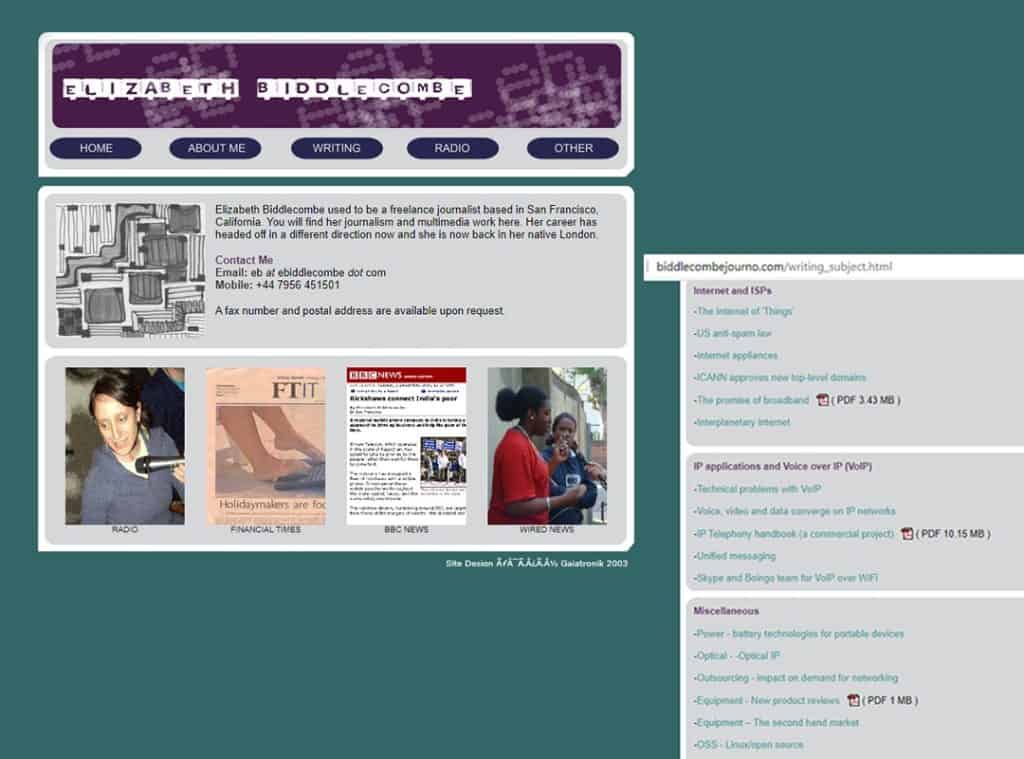
I started making my way over to the more mainstream press, first writing for Wired.com and then BBC News Online, which in turn led me to make some radio stories for the BBC World Service.